Why Practical Housing, Aging Multifamily Assets, and Operational Intelligence May Define the Next Decade of Real Estate Investing
I have spent nearly a decade inside Edmonton real estate.
Since 2019, my company has overseen the lease-up, marketing, and operations of close to 2,000 purpose-built rental units across Edmonton, including large-scale CMHC-financed developments.
And I did not do this because my dream was to become a property manager.
I did it for the data.
For the past five years, we have systematically tracked advertising performance, leasing behaviour, renter communication, decision-making patterns, turnover trends, operational friction, maintenance data, retention behaviour, and portfolio-wide operational metrics across thousands of units — building the structured intelligence layer required for AI to eventually synthesize, predict, and optimize multifamily operations at a scale this industry has never experienced before.
That operational vantage point has fundamentally changed the way I see Edmonton’s rental market.
Because based on the data I have been tracking, I believe most people are reading the Edmonton rental market completely wrong.
Edmonton Has Always Been an Outlier
Edmonton is not Toronto.
Edmonton is not Vancouver.
We are a fundamentally different housing ecosystem with different economic drivers, different renter behaviour, different supply elasticity, and different investor psychology.
Toronto and Vancouver became markets defined by scarcity.
Edmonton has historically been defined by responsiveness.
When prices rise sharply, Edmonton builds. When demand increases, Edmonton responds. When affordability tightens, the city still retains some ability to adapt.
Many analysts continue applying big-market narratives to a city operating under entirely different structural conditions.
Everyone Is Repeating the Same Narrative
Right now, the dominant conversation around Edmonton’s rental market sounds something like this:
Vacancy is rising.
Rents are flattening.
Supply is increasing.
Incentives are returning.
And the conclusion most people immediately jump to is simple:
Edmonton is weakening.
I think the opposite is happening.
I believe Edmonton is moving through a temporary supply shock directly before a major shortage of practical and attainable housing.
Because if you actually look underneath the aggregate numbers, the softness is highly concentrated.
CMHC data shows Edmonton’s purpose-built rental vacancy rate rose to 3.8% in 2025. At the same time, rented condominium vacancy remained significantly tighter at just 1.7%.
It is concentrated heavily in newer, amenity-driven, higher-rent buildings — all targeting nearly identical renter profiles at the exact same time.
High-credit tenants. Dual-income households. Young professionals. Predictable employment histories.
And much of that product was delivered into the same submarkets simultaneously.
That is market clustering.
And clustered markets eventually cannibalize themselves.
Toronto has already demonstrated exactly what happens when too much capital chases the same renter profile while practical housing quietly disappears underneath the market.
Meanwhile, the deeper demand underneath Edmonton’s market never disappeared.
Working households. Young families. Long-term renters. Newcomers. Fixed-income households. Renters increasingly priced out of ownership.
That demand still exists.
The problem is that much of the new supply entering the market was never built for them.
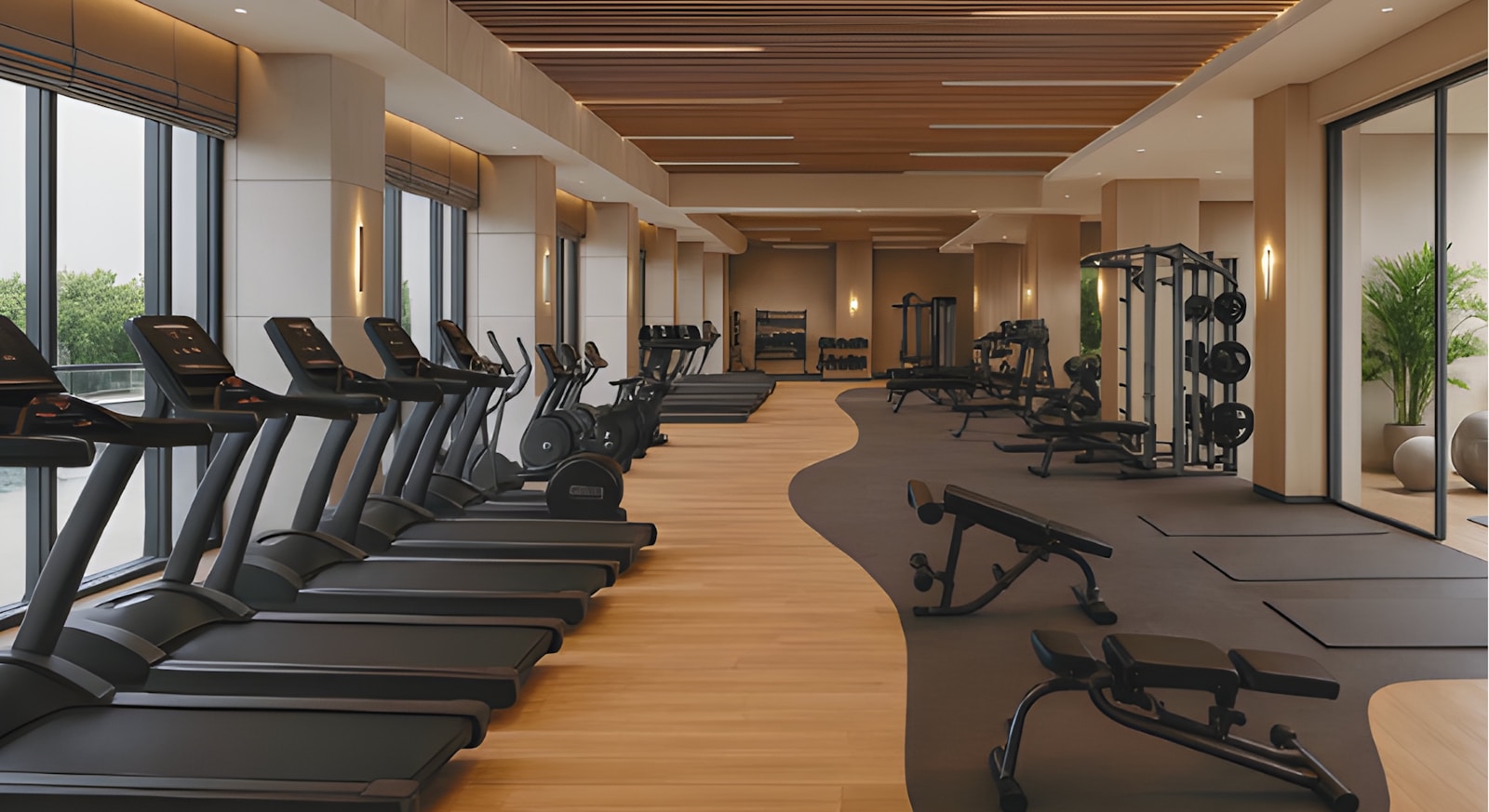
Micro units. Luxury gyms. Rooftop lounges. Amenity packages designed to justify higher rents and tighter pro formas.
The Market Is Quietly Engineering a Future Housing Shortage
Many investors are focused on the current supply wave.
I am focused on what comes after it.
Because once this current inventory absorbs — and it will absorb, although likely with margin compression and operational pain — the market is going to realize something very quickly:
There is almost no meaningful supply of deeply attainable housing coming behind it.
Not because developers do not understand demand.
Because the economics increasingly do not support building it.
Land costs. Labour costs. Financing costs. Insurance costs. Development charges. Construction inflation.
Every major input continues forcing the same conclusion:
smaller units,
higher rents per square foot,
and narrower renter targeting.
The same reason developers are no longer building large bungalows for aging populations is the same reason deeply practical rental housing is becoming increasingly difficult to build economically.
The math no longer supports it.
Less product designed around how people actually live.
The Future Renter Is Changing
Many are still underwriting for the 2022 renter.
But this is no longer a 2022 world.
The economic, political, technological, and social pressures shaping everyday life have become significantly more complex.
The 2027 renter will likely look very different.
More cautious. More debt-sensitive. More stability-focused. More likely to rent longer. More emotionally exhausted. More value-driven. And far more interested in practical livability than performative luxury.
I believe the next generation of renters will increasingly prioritize:
functionality over spectacle,
predictability over status,
stability over novelty,
and community over amenities.
Because much of the market is still delivering product optimized around leasing velocity rather than long-term renter behaviour.
And investors who fail to recognize that shift early may find themselves holding assets increasingly disconnected from future demand.
Why Aging Multifamily Housing May Become One of Edmonton’s Most Valuable Asset Classes
Which is why I believe one of the most undervalued opportunities in Edmonton right now is aging multifamily housing.
Specifically:
1970s and 1980s apartment buildings owned by long-term landlords who have held them for decades, underpriced rents for years, and are now aging out of active management.
Because these buildings already contain the most expensive part of development:
the infrastructure itself.
And the replacement cost of these buildings today would be dramatically higher than when they were originally constructed.
At the same time, many of these buildings contain something becoming increasingly difficult to build economically in Canada:
actual livability.
Functional layouts. Real bedrooms. Storage. Larger suites. Space for dining tables. Space for families.
Housing designed around living — not simply optimizing rent per square foot.
I can point to a real example:
A 12-unit 1975 walk-up in Garneau, one block from the University of Alberta.
Currently generating roughly $121,000 annually at below-market rents.
At today’s market rates, without major repositioning, that same building is likely capable of closer to $185,000 annually.
Meaning a significant portion of the upside is already embedded inside the asset before major renovation or energy retrofits even begin.
That is existing infrastructure being materially undervalued by the market.
And I believe one of the biggest mistakes Edmonton could make is automatically treating these buildings as teardown opportunities simply to deliver another wave of smaller, more expensive units competing for the exact same renter profile all over again.
Technology Is About to Reshape Multifamily Housing
Now layer technology on top of all of this.
BOMA Canada recently reported that 52% of commercial real estate operators believe AI will improve efficiency but will not fundamentally transform the industry.
I believe that is an extraordinary miscalculation.
Because operational efficiency is rapidly becoming infrastructure — not differentiation.
Predictive maintenance. AI leasing. Behavioural forecasting. Automated communication. Portfolio-wide operational intelligence. Real-time operational synthesis across entire portfolios.
The operators building structured data systems today are not just preparing to reduce costs.
They are preparing for a future where AI can identify patterns, inefficiencies, turnover risks, maintenance failures, leasing friction, and renter behaviour faster than human operators ever could.
This industry is still operating far more manually than most people realize.
Spreadsheets. Disconnected systems. Reactive maintenance. Fragmented communication. Manual workflows.
Meanwhile, buildings are generating enormous amounts of operational data while extracting almost no intelligence from it.
The Real Future Competitive Advantage Is Not Technology
The future competitive advantage in multifamily housing is not simply operational efficiency.
It is culture.
Technology will increasingly handle:
operational drag,
communication,
leasing automation,
forecasting,
maintenance optimization,
and administrative efficiency.
But technology cannot create:
trust, emotional intelligence, belonging, community, or human connection.
And I believe those things are going to become increasingly valuable.
We are entering an era where people are increasingly isolated, transient, digitally exhausted, and disconnected from each other.
Which means buildings that create actual attachment may materially outperform buildings competing purely on amenities and newness.
But culture is not created by putting a lounge in a building and hoping people use it.
Culture has to be operated.
It looks like residents knowing the people who manage the building. Open-door management. Fast response times. Consistent communication. Staff who understand that every interaction either builds trust or erodes it.
It looks like community gardens instead of empty rooftop lounges. Resident-led events instead of corporate wine nights. Dog-owner groups. Tool libraries. Seasonal traditions. Local business partnerships. Spaces designed to be used — not just photographed for leasing ads.
Most importantly, it looks like listening.
Not assuming residents want another amenity, but understanding what would actually make their lives feel calmer, safer, easier, and more connected.
Performative community is an amenity calendar.
Real culture is when leaving the building means leaving familiarity, routines, relationships, and belonging.
That is when retention stops being transactional and becomes emotional.
Because most landlords still spend enormous amounts of money replacing tenants:
marketing,
free rent,
turnover maintenance,
vacancy loss,
and constant acquisition pressure.
The future advantage may not belong to the operators who attract the most tenants.
It will belong to the operators who create the fewest reasons to leave.
Not treating residents like temporary revenue streams.
Treating them like long-term stakeholders in the health of the community itself.
That can look like:
resident loyalty programs,
micro-employment opportunities within the building,
community ambassador roles,
resident-led programming,
and frontline staff trained not only in leasing —
but in emotional intelligence, conflict resolution, and resource navigation.
Because many renters today are not simply experiencing housing stress.
They are experiencing life stress.
And buildings that know how to respond to those realities intelligently and compassionately may create enormous long-term operating advantages.
Through creating environments people become emotionally invested in protecting.
The Future Is About Resilience
The future is uncertain almost everywhere right now.
Tariffs. Wars. Commodity volatility. Migration shifts. Climate instability. AI disruption.
None of us control those forces.
But we absolutely control how vulnerable our investments are to them.
And I believe the investors who win over the next decade will not necessarily be the ones who optimized hardest for the previous cycle.
They will be the ones who built the most resilient systems for the next one.
The market is focused on vacancy.
I am focused on where demand becomes impossible to replace.
The market is focused on incentives.
I am focused on retention economics, behavioural loyalty, and which operators are quietly bleeding cash through turnover while calling themselves full.
The market is focused on today’s rents.
I am focused on tomorrow’s renter.
The market is focused on performative luxury.
I am focused on resilience.
Because the next decade of multifamily investing will not reward the people who simply accumulated the most doors.
It will reward the people who understood:
which assets were structurally irreplaceable,
which renters were underserved,
and which operational systems became exponentially more valuable as the world became more unstable.
The people who recognize that early may not just survive the next cycle.
They may build extraordinary wealth because of it.