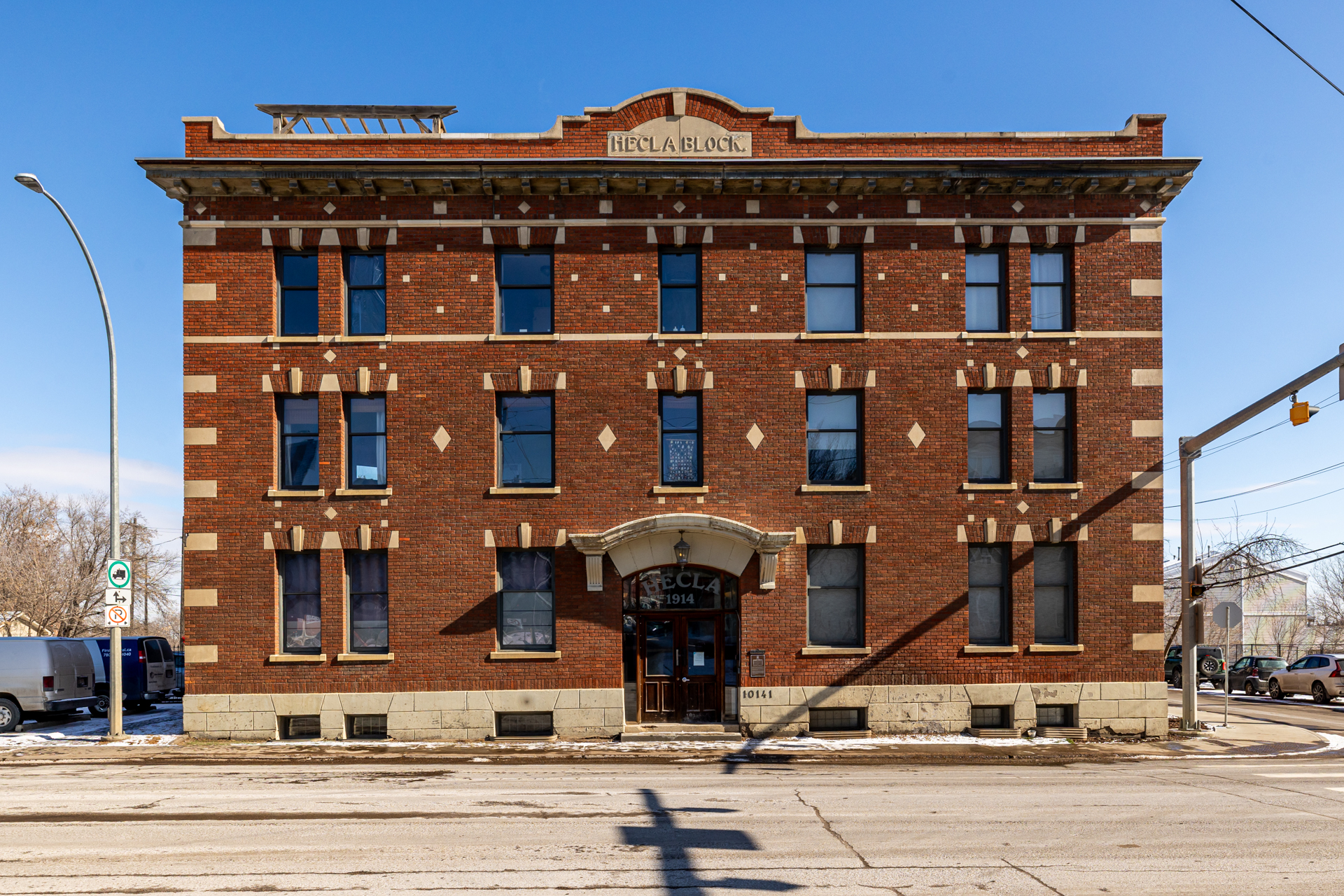
There’s a building at the corner of 95 Street and 101A Avenue that has outlasted everything: booms, busts, a fire, decades of neglect, and the constant pressure of redevelopment.
Built in 1914. Condemned in the 1990s. Gutted by fire. And still, it stood.
Four walls of red brick that refused to come down.
That building is the Hecla Block — one of the most recognizable heritage loft buildings in Edmonton.
Edmonton Has a Loft Problem (and It’s Not What You Think)
Search “lofts for sale in Edmonton” and you’ll find options.
Search “lofts for sale in Edmonton” and you’ll find a lot of buildings using that word loosely.
Open-concept layouts in new construction. Exposed ductwork designed to look industrial. Tall ceilings over freshly poured concrete.
They’re fine.
But they’re not lofts.
They’re loft-adjacent — built to evoke a feeling that actually comes from somewhere real.
True loft living has a specific origin: buildings that existed before you. Industrial or early residential spaces repurposed over time, where the structure itself becomes the design.
The Hecla Block is the real version.
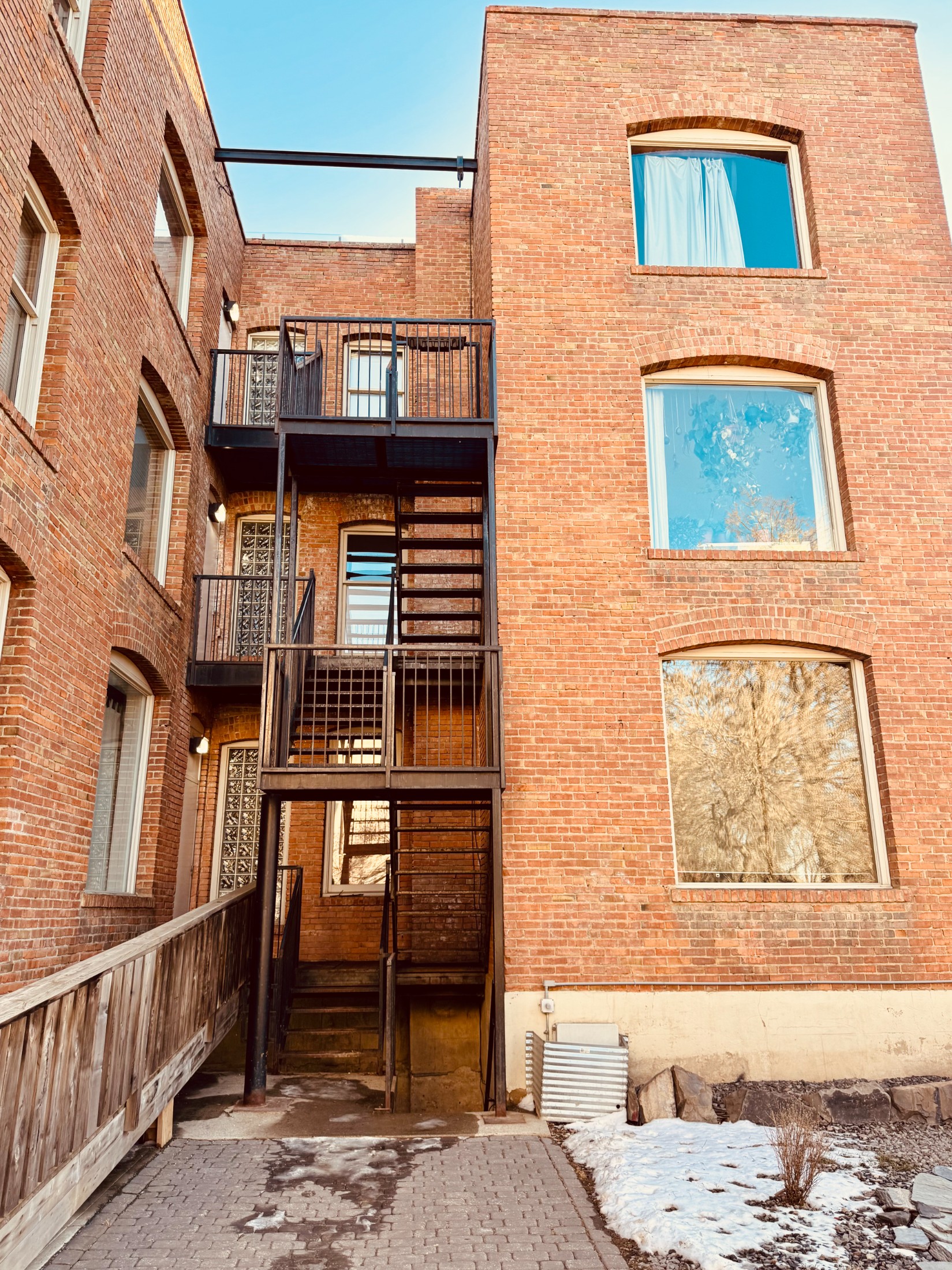
Built as Edmonton was still defining itself, this pre-WWI apartment building has survived long enough to become something else entirely. The brick is original. The bones are over a century old. The exposed walls inside each unit aren’t a design decision — they are the building.
There are only 14 units.
There will only ever be 14 units.
And currently, one of them is for sale.
Let’s Talk About Location
This is Boyle Street—one of Edmonton’s oldest and most layered neighbourhoods.
Mapped in 1892, this is where the city actually began to take shape. The streets, the scale, the buildings—they weren’t manufactured later. They’ve evolved, adapted, and held onto something most neighbourhoods have already lost: character.
If you’ve spent time in places like East Vancouver, you’ll recognize the feeling. Not polished. Not overly curated. But real. Lived-in. Changing in a way that signals momentum.
And that momentum is already underway.
The Quarters redevelopment is actively reshaping the east edge of downtown. Chinatown is seeing renewed cultural and commercial energy. City-led infrastructure upgrades are rebuilding the streets, sidewalks, and lighting through 2026. The Arts District—Winspear, the Art Gallery, the Royal Alberta Museum—is a short walk away. Downtown is minutes, without feeling like you’re in the middle of it.
And then there’s what sits just below it.
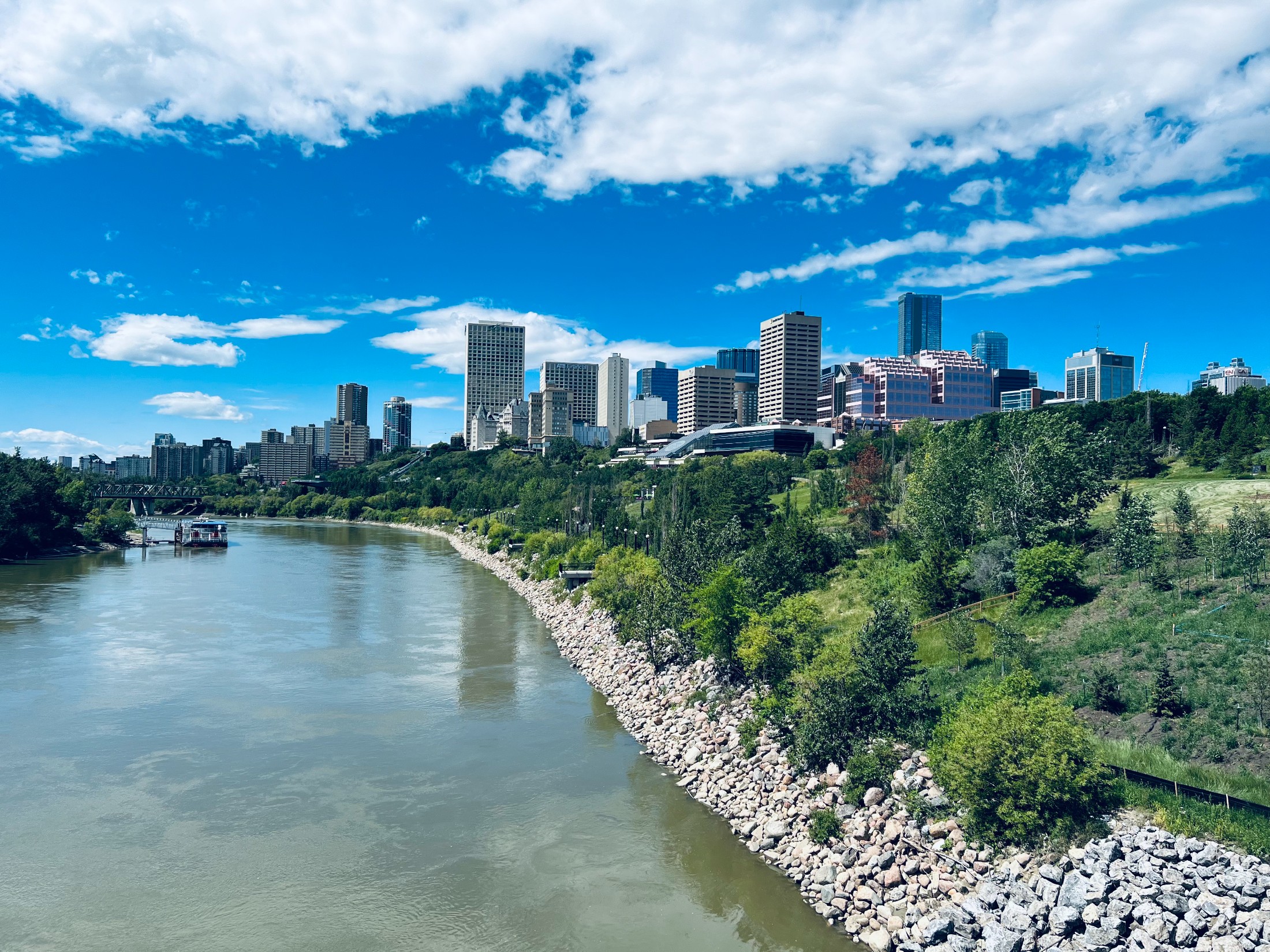
Within ten minutes on foot, you’re in the North Saskatchewan River valley — the largest urban parkland in North America, 48 kilometres of connected trails, parks, and green space that Edmonton somehow managed to protect from development.
Louise McKinney Riverfront Park is right there. Dawson Park—with its off-leash trails, fire pits, hoodoo views, and boat launch—is minutes away. The Muttart Conservatory’s glass pyramids catch the morning light across the water.
If you ride a bike, you can be deep in the valley and feel genuinely removed from the city within minutes of leaving your front door.
On weekends, Little Brick Café in Riverdale is a short walk down the hill. It’s one of those places people return to—good coffee, seasonal menu, a patio that fills up quickly when the weather turns.

The LRT runs nearby. Downtown is minutes by bike or car. The Italian Centre on 95A Street is close enough to function as your actual grocery store.
This is the kind of urban access people pay a premium for in other cities.
In Edmonton, it still exists—just not everywhere.
The Loft
This is a southwest-facing one-bedroom, one-bathroom corner unit.
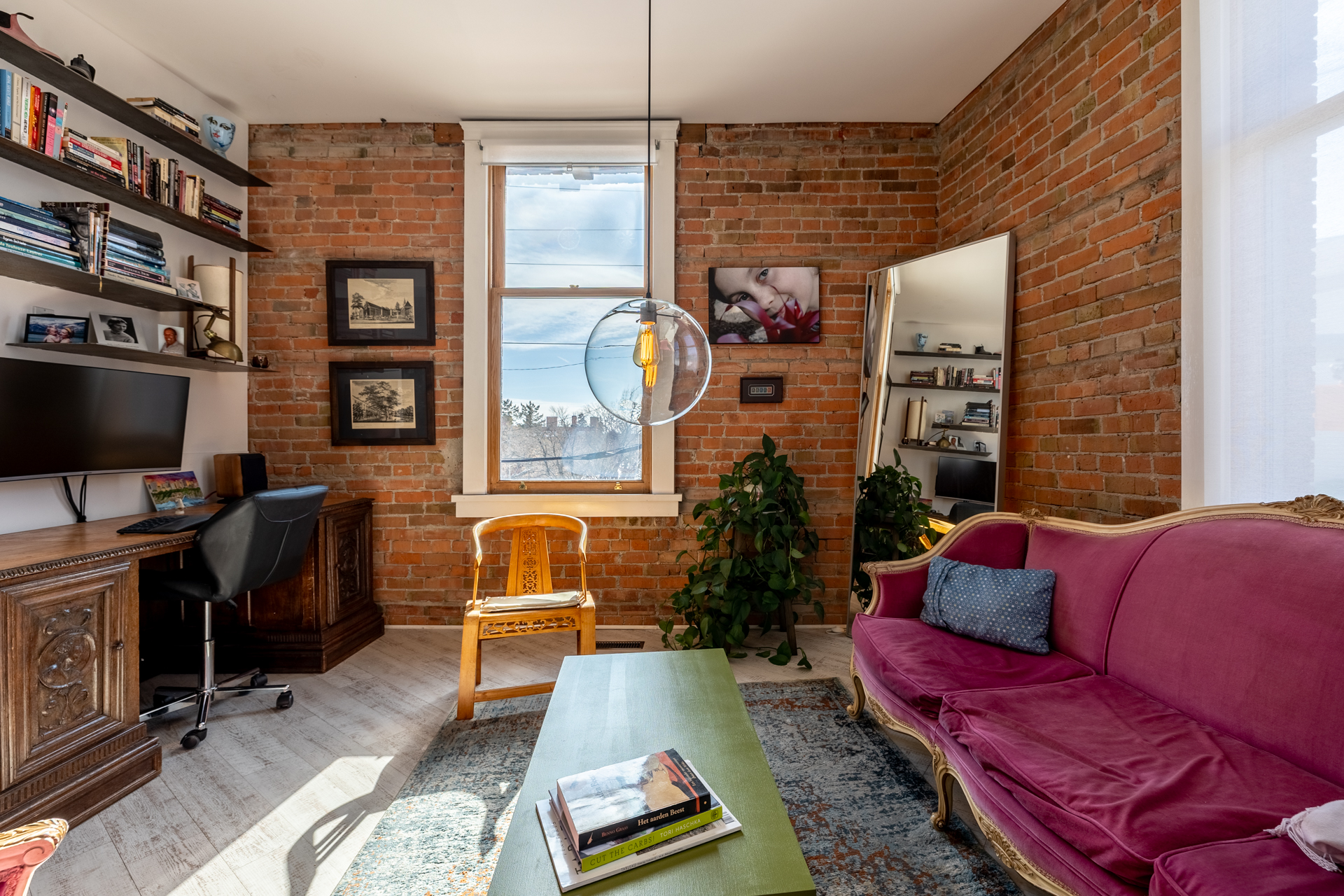
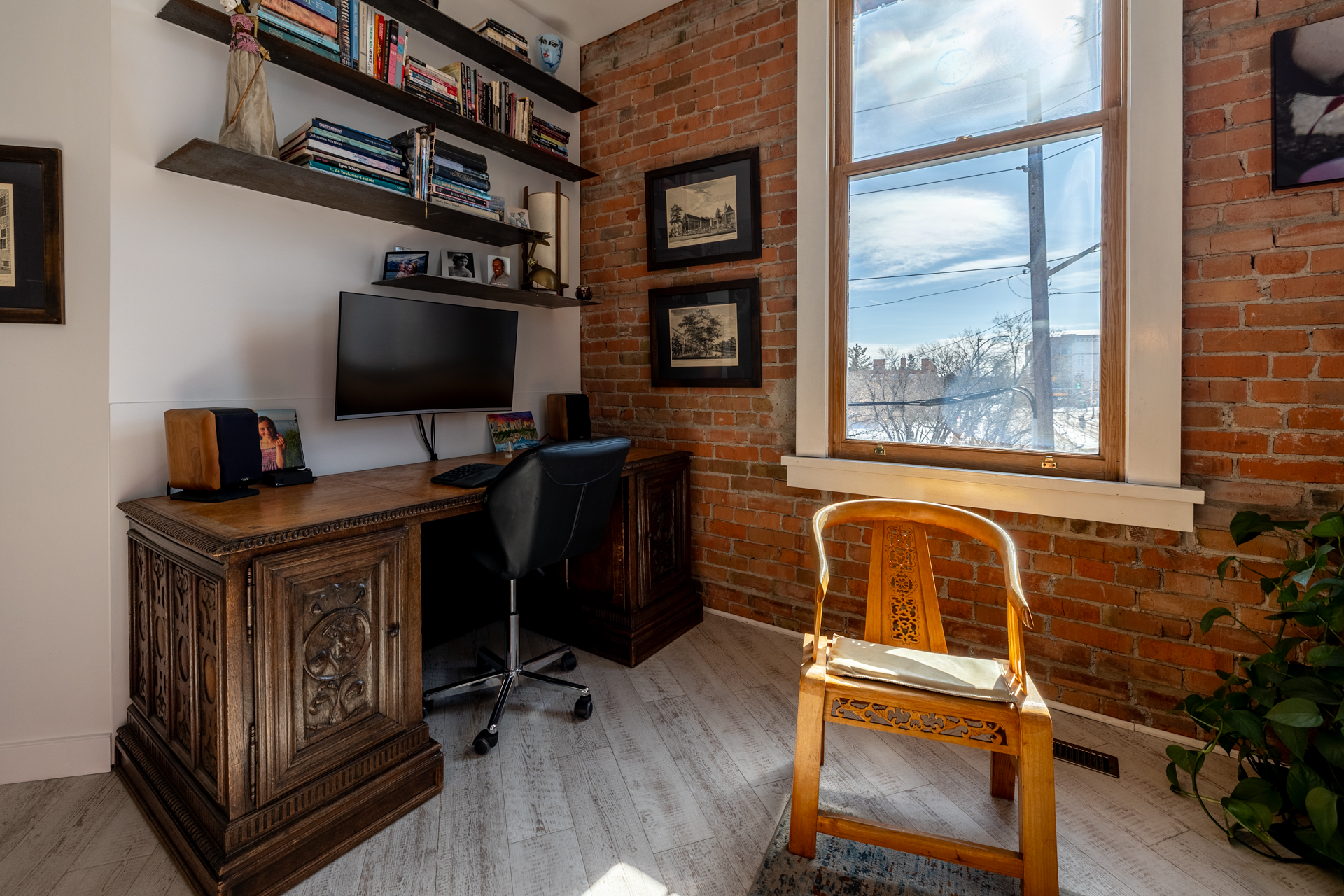
Natural light moves through the space from morning into evening, carried by oversized south and west-facing windows. Exposed brick lines every wall, and the ceiling height gives the unit a sense of volume that isn’t common in newer construction.
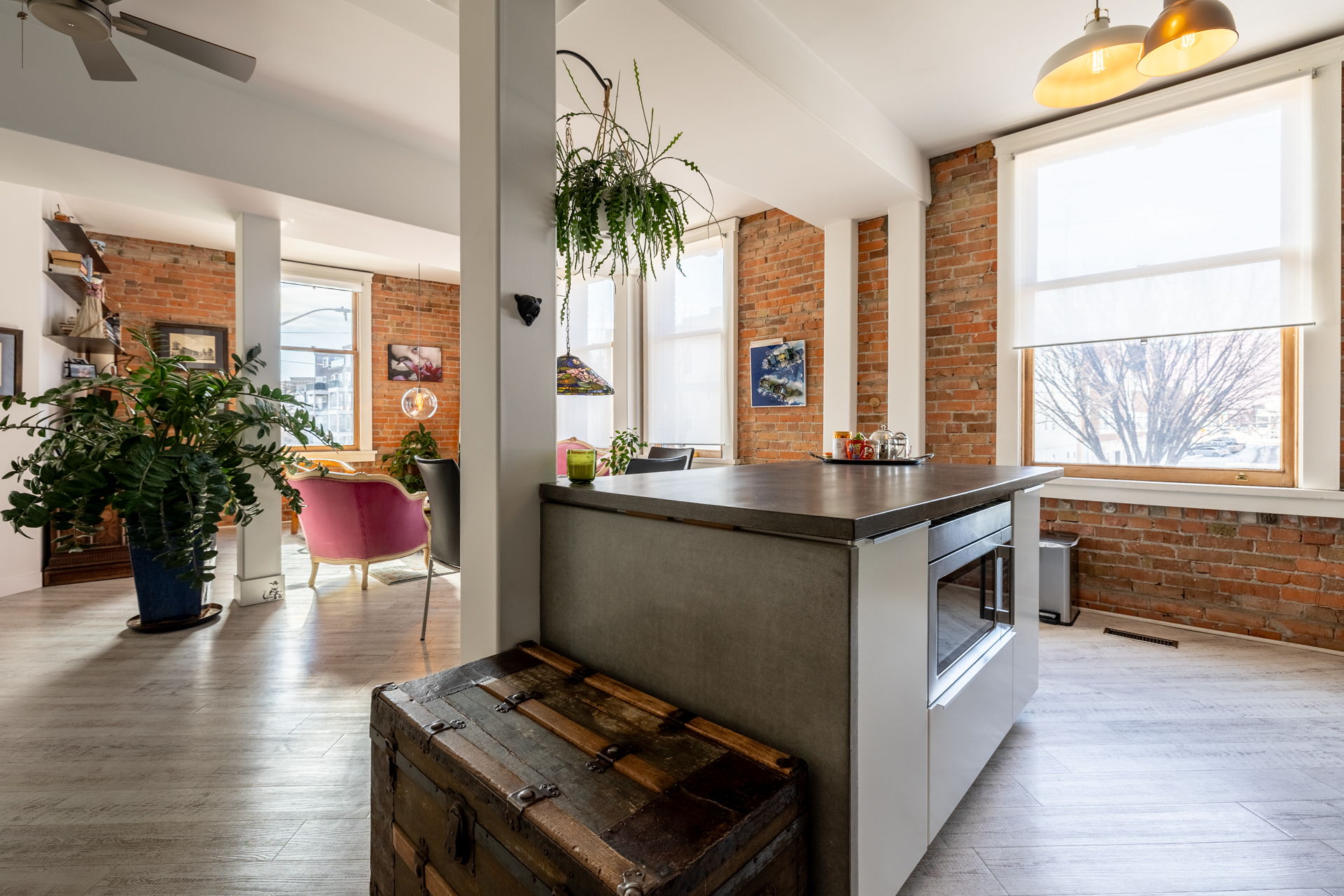
The layout is open, with the kitchen positioned around a concrete island and surrounded by updated cabinetry and modern finishes that sit naturally within the building’s original structure.
The bathroom has been fully renovated, and in-suite laundry is already in place.
It’s a space that doesn’t try to reinterpret loft living. It simply is.
The History of Hecla
The Hecla Block was designed by David Hardie and John Martland—Martland would later become Edmonton’s City Architect.
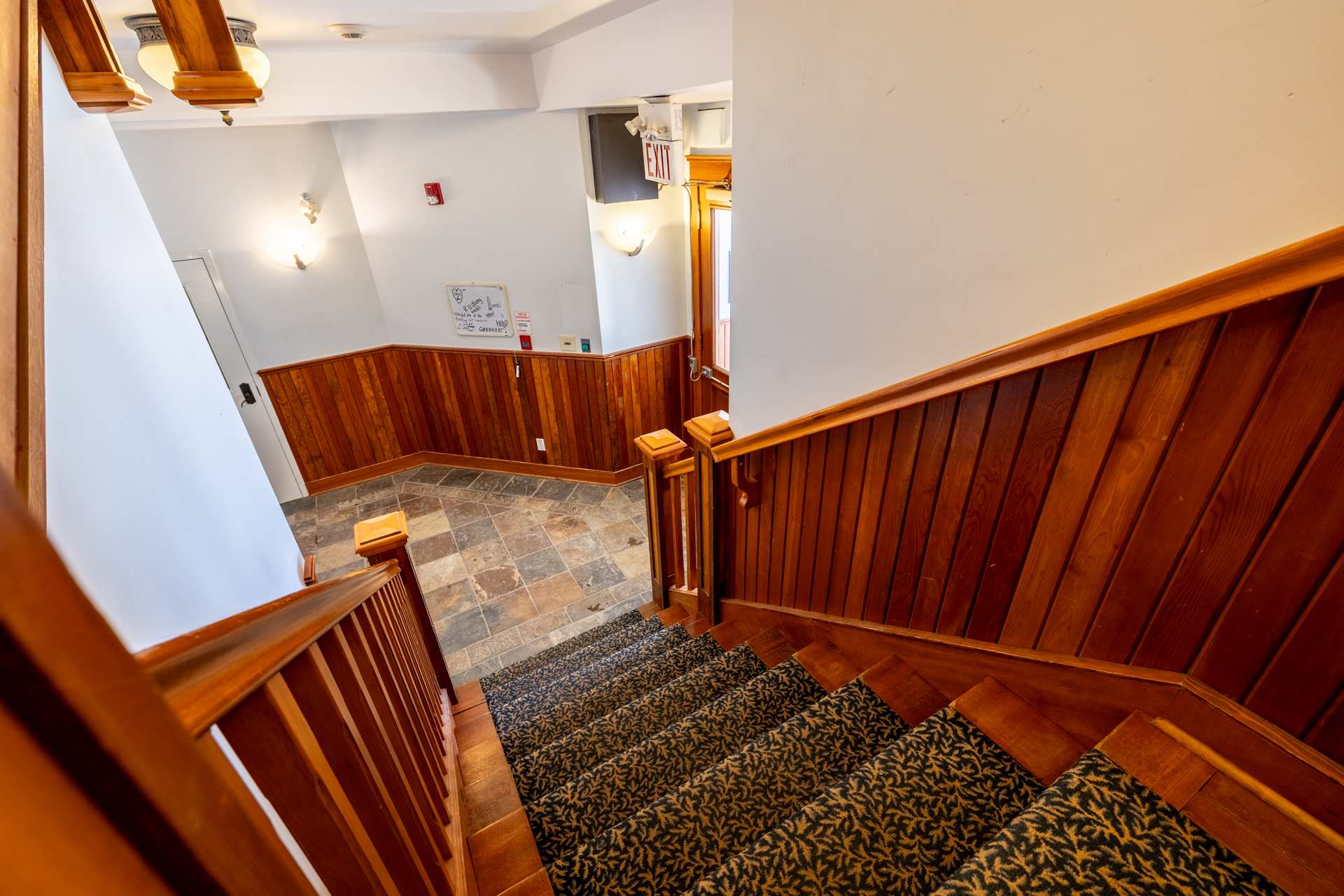
The materials and details reflect that era: wire-cut red brick, stone lintels, ornamental keystones, and the original “HECLA BLOCK” name set into the façade. Even the foyer tilework remains.
The building was named by its original owner, Icelandic immigrant John Johnson, after Mount Hekla.
After a fire in 1994, only the shell remained. What followed was a full interior reconstruction in the early 2000s, creating open-concept loft layouts inside a preserved 1914 exterior.
That combination—historic structure with modern interior function—is what defines true loft living.
Who This Is For
This isn’t about square footage.
It’s about preference.
The Hecla Block tends to attract people who are looking for something specific—something with texture, history, and a sense of place.
People who want to walk out their door and feel connected to a city, not insulated from it.
People who understand that not everything of value is new.
If you’ve experienced loft living in other cities and wondered where Edmonton’s version is—
This is it.
Caitlin Heine is a REALTOR® with RE/MAX Real Estate and co-founder of Iconic YEG, specializing in Edmonton lofts, heritage properties, and homes with character in central Edmonton.
📧 caitlin@iconicyeg.com
📞 587-336-3176
#203, 10141 95 Street NW | Hecla Block | $299,900