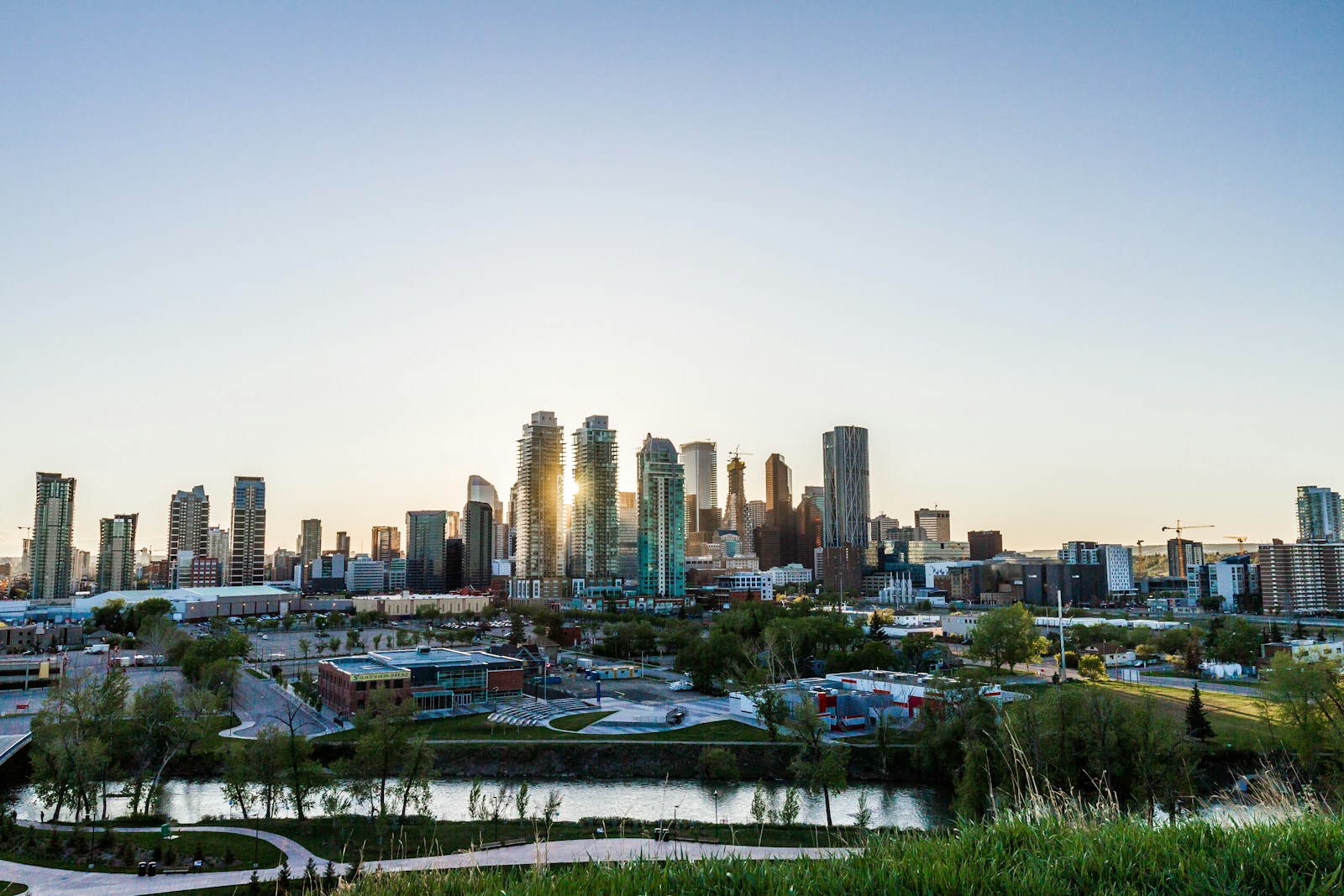
SOLD | 14623 89A Ave

In Parkview, Edmonton

The Story Behind the Sale

Strategic Preparation. Powerful Results.

Some sales happen quietly. Not by chance, but by design.

Before this Parkview bungalow ever went live on MLS, it was already generating interest. Through intentional pre-marketing — including professional staging, strategic social media placement, video storytelling, and a custom landing page, we built momentum before the listing launched.

And it worked.

The day before even hitting the market, this property received two strong offers.

The demand for Parkview homes is strong — especially for well-presented, well-positioned properties like this one. Buyers are waiting for listings that feel intentional — not rushed. And that’s where the right strategy makes all the difference.

When you work with me, you’re not just listing a property. You’re launching a campaign built to attract the right buyers, faster, and for stronger results.

What Made This Parkview Sale Different

  • Professional staging and styling to highlight light, flow, and livability.

  • Pre-listing campaign across Instagram, YouTube, and local buyer networks.

  • Custom landing page and storytelling video crafted to connect emotionally with buyers.

  • Local buzz and word-of-mouth before the first showing request.

  • Sold before launch, with multiple strong offers.

Thinking About Selling in Parkview?

If you’ve been considering selling, the best time to start the conversation is before you’re ready. Because how you prepare — and how your story is told — defines the outcome.

Let’s talk strategy. No pressure, no gimmicks — just a conversation about what’s possible.


RSS

Community Over Concrete: Reshaping Cityscapes

Modern cities are often characterized by sprawling infrastructures, towering skyscrapers, and the constant hum of construction. In the race to urbanize, the essence of community can sometimes be lost beneath layers of concrete and steel. Yet, there is a movement that champions an alternative approach, one that places culture at the heart of city-building. Calgary's East Village stands as a testament to this philosophy, where an entire locality's resurgence is anchored in cultural foundations rather than mere brick-and-mortar developments.

Reimagining Urban Development

The revitalization of Calgary's East Village represents a paradigm shift in urban planning. What was once a neglected area is now being celebrated as a vibrant cultural hub that pays homage to the city’s history while boldly striding into the future.

This transformation didn’t happen overnight. It began with a vision that recognized the latent potential of the forgotten space at the confluence of two rivers—a site rich with natural beauty and historical significance.

In a marked departure from conventional urban redevelopment, where emphasis is often placed on large-scale infrastructure projects, Calgary's approach was decidedly more organic. The aim: to breathe life into the east-village by nurturing its cultural soul. This innovative strategy has proven to be more than an aesthetic choice—it's an investment in creating a sustainable and flourishing community legacy.

The Cultural Heartbeat of East Village

The philosophy driving East Village's development recognizes the integral role culture plays in fostering a sense of belonging. Residents have witnessed this cultural bloom, with amenities and attractions popping up, transforming the neighborhood into one that's both a delight to live in and a destination to visit.

The culprits behind East Village's allure? Cultural anchors like the National Music Centre, which not only preserves Calgary's musical heritage but also propels it forward through live performances and exhibitions. The awe-inspiring Central Library doesn't merely stock books; it's a nucleus for community activities and cultural events.

Then there's the EV Junction and the RiverWalk initiative, both injecting life into public spaces by celebrating local creativity—from the hustling spirit of entrepreneurs to the soul-touching eloquence of artists. Not to forget the Simmons Building, whose transformation from a historic structure into a culinary mecca reflects the broader metamorphosis of the East Village—where history and modernity coalesce deliciously.

A Blueprint for Tomorrow

The East Village narrative is about more than seaside sunsets and stunning architecture. It's proof that community-centric development is not just viable but vibrantly successful,showcasing how cities can indeed be built around the needs and spirits of their residents.

The master planners behind this visionary concept,CMLC understood that a city's heart beats not through its freeways or skyscrapers, but through the communal experiences and cultural richness its environment fosters. By prioritizing these elements, Calgary has not only changed the complexion of urban living in East Village but has also set an unprecedented standard for future developments.

This "cultural first" framework has demonstrated that when public spaces celebrate and serve the community, urban centers are transformed from places people pass through to places where they belong.

The Proof is in the Community

The rebirth of East Village is a bold affirmation that cityscapes can indeed be reshaped with foresight and intentionality. The $400-million public investment that served as the initial catalyst has already prompted nearly $3 billion in private investment, signaling confidence in this communal approach.

The sentiments of many East Village residents who now view the district as a vibrant, welcoming home. Whether it's through the hum of the market, the rhythm of music at the National Centre, or the tranquil flow of the RiverWalk, each element of East Village converges to form an intricate mosaic—a diverse yet coherent cultural fabric.

As urban planners and visionaries study the revitalized East Village's brick paths and art-lined streets, they glimpse the power of culture as both an anchor and a sail. We glean invaluable lessons on how to build communities with people, not just structures, at the core.

This journey from decay to renaissance, driven by a commitment to cultural respect, exemplifies just how profoundly a city's identity can be reinvented. It underlines the truth that durable urban legacies are not built with concrete—they are woven from the rich tapestries of community life.

Ultimately, East Village is a clarion call to urban developers and city leaders worldwide. It implores us to pivot towards a vibrant model of city development rooted not in the quantity of our structures but in the quality of our communities. It is here, at the confluence of rivers and dreams, where we discover that cities can indeed be built community-first, creating permanent backdrops against which countless individual stories can unfurl.

The lesson is clear: when culture leads, legacy follows.
What are Edmonton’s Most Iconic Communities?

Read

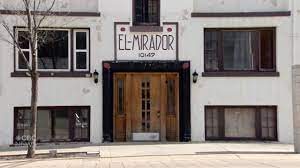
Case Study on Community Culture: Lessons from El-Mirador

Stepping into the past, the El-Mirador was a standing testament to what it means to build not just a structure, but a thriving, interwoven community, a sanctuary in the urban sprawl. Its success wasn't merely architectural—it was the cultivated culture.

Here, I lay down the argument that our future endeavors must embrace the soulful approach of El-Mirador.

Introduction

El-Mirador's story is intricately woven into the Edmonton cityscape, a story of resilience and vision by Ralph Henry Trouth. In its heyday, El-Mirador was a vibrant community hub with a neighborly atmosphere almost unheard of in today's fast-paced world. This cultural cornerstone not only invited life into its halls but created a legacy that has lasted far beyond the buildings themselves.

The Success of El-Mirador

Imagined and brought to life through a personal touch and the unique vision of Trouth, El-Mirador went beyond architecture; it fostered an unparalleled sense of community. Neighbors knew each other by name, shared activities, and built lasting friendships within its sun-kissed walls. The open-air halls, communal courtyards, and inviting balconies encouraged social interactions, creating a cult-like culture where loyalty to the space and each other was evident.

Lessons for Future Development Projects

What can we learn from El-Mirador? Firstly, the imperative of integrating the community's needs and spirit into the development framework. The brilliance in creating a sustainable legacy lies not in the concrete and steel but in embracing intangibles—ensuring a development is not at odds with the community's soul but rather celebrates it.

Secondly, fostering a sense of stewardship and pride among the residents should be a priority. Developments should encourage ownership at all levels so that every inhabitant feels they are part of something larger than themselves, caretakers of a collective dream.

Lastly, the building of a strong brand identity is paramount, but not through marketing gimmicks or peripheral offerings—it has to be sewn into the very fabric of the physical space, as was the case with El-Mirador’s distinct Spanish Revival style.

Challenges and Considerations

Despite the clear pathway illuminated by El Mirador, replicating such a feat is not without its hurdles. Preserving the values upon which a community is built while ushering in inevitable growth is a delicate dance. Moreover, inclusivity and diversity cannot be afterthoughts; they must be foundational.

Conclusion

And so, the onus falls on us in Edmonton—as city planners, as developers, as citizens—to carry forward the legacy. We must demand more from the spaces we create and inhabit, elevate our expectations, and compel future projects to embody the principles that made El-Mirador a blueprint for community culture.

In its demise lies a calling: to stir advocacy for community-centered development, to raise our voices for developments with heart. It's time to move past the era of buildings-as-commodities and into one where communities are nourished and preserved.

The essence of El-Mirador should not be archived into the annals of history, but instead allowed to ignite an impactful conversation about how we shape the places we live in.

How many buildings in Edmonton can you name that have a cult like culture?  How can we create that today?

Let's craft our surroundings with the intention of fostering legacy, loyalty, and culture.

Advocate for community-centered development—the spirit of El-Mirador demands no less.

Read

Parkview is one of Edmonton’s most established west-side communities, known for its tree-lined streets, family-friendly feel, and unbeatable access to the River Valley. Residents are drawn to its top-rated schools, active community league, and proximity to both downtown and Whitemud Drive, making commutes simple while preserving a sense of quiet at home. The River Valley trails are steps away, offering endless opportunities for walking, cycling, and connecting with nature. With its wide lots, mature trees, and strong community spirit, Parkview has remained one of Edmonton’s most desirable neighborhoods for generations.

Data last updated on August 24, 2026 at 05:30 PM (UTC).
Copyright 2026 by the REALTORS® Association of Edmonton. All Rights Reserved.
Data is deemed reliable but is not guaranteed accurate by the REALTORS® Association of Edmonton.
The trademarks REALTOR®, REALTORS® and the REALTOR® logo are controlled by The Canadian Real Estate Association (CREA) and identify real estate professionals who are members of CREA. The trademarks MLS®, Multiple Listing Service® and the associated logos are owned by CREA and identify the quality of services provided by real estate professionals who are members of CREA.